
Self-Directed Learning
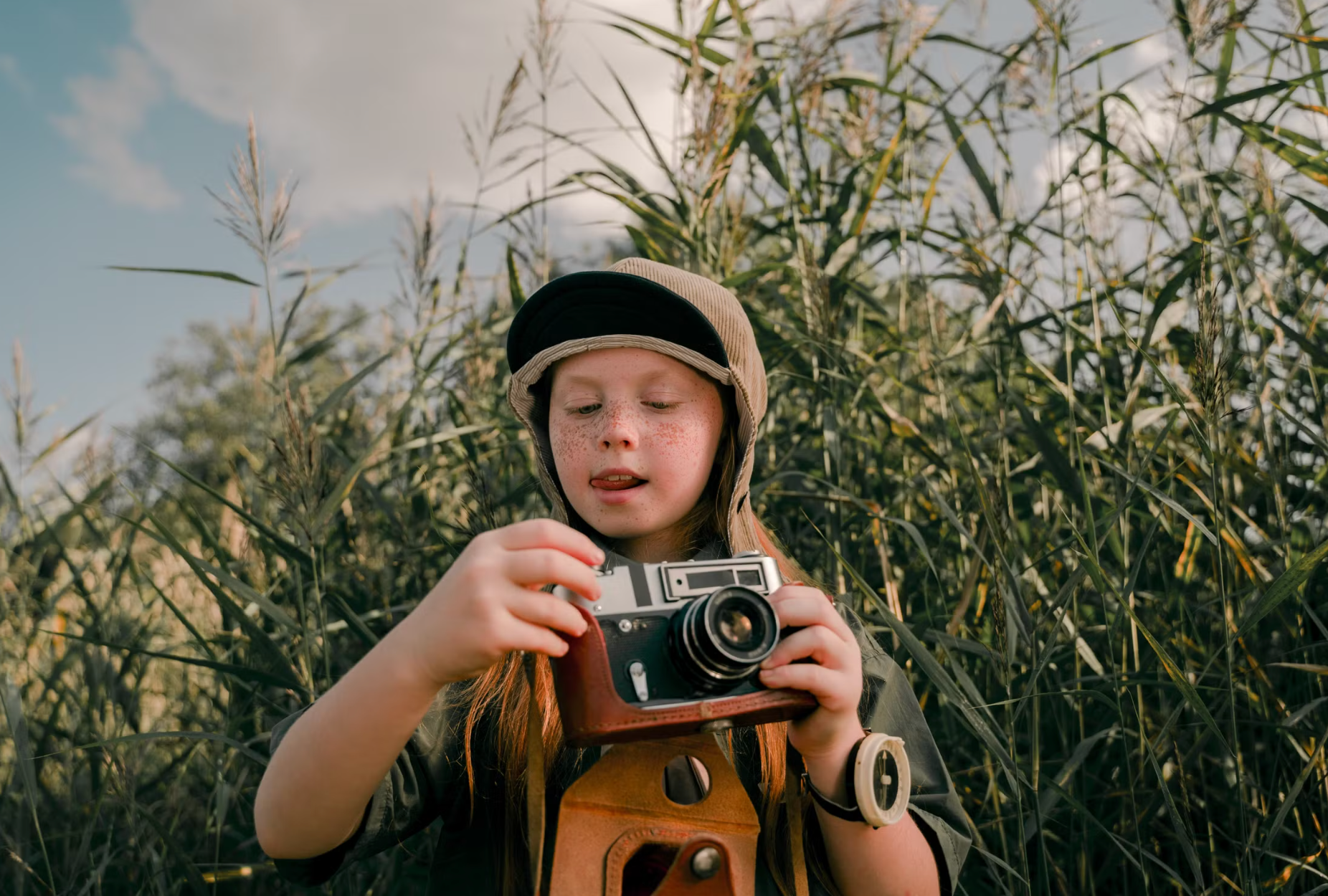
Children are naturally curious and driven to make sense of their environment. From their earliest years, they explore, question, experiment, and work to understand the world around them. When children are invited to pursue their questions, solve problems, and engage in meaningful work, they become deeply invested in learning. They develop confidence in their ability to think, create, and contribute. They begin to see themselves as active participants in their education.
Researchers Gruber, Gelman, and Ranganath from UC Davis, publishing in the journal Neuron, found that when people feel curious about something, the brain’s reward circuits activate. This suggests that curiosity does more than make learning enjoyable. It actually helps the brain learn. In this study, participants were significantly more likely to remember information when they were genuinely curious about the answer. The researchers found that curiosity activates dopamine, which is usually associated with motivation and reward. It also forms new neural pathways! In other words, when learners are interested, engaged, and invested in a question, learning is deeper and more durable.
Additionally, Psychologists Edward Deci and Richard Ryan's Self-Determination Theory helps explain how this drive to learn develops over time. When people experience autonomy, competence, and meaningful connection with others, intrinsic motivation flourishes. Learners become more engaged, persistent, and invested in their growth. They develop a stronger sense of agency: the belief that their choices, actions, and efforts can make a meaningful difference. An important goal of education then is to cultivate learners’ curiosities and inherent tendencies toward growth.
At Sacramento Community School, we too believe that curiosity, agency, and joy are essential ingredients for deep and lasting learning. Agency grows when students have opportunities to make meaningful choices, set goals, reflect on their progress, contribute their ideas, and take increasing ownership of their learning. These experiences help students develop confidence, purpose, self-direction, and a lifelong love of learning.
The world our children are inheriting is changing rapidly. Information is abundant. Artificial intelligence can answer questions, generate content, and provide instant access to knowledge in ways that would have seemed unimaginable just a few years ago.
In this environment, success depends on the ability to think critically, ask meaningful questions, evaluate information, identify trustworthy sources, solve complex problems, collaborate with others, adapt to changing circumstances, and remain curious throughout life.
We believe education should help students develop these distinctly human capacities. We want young people to become thoughtful consumers of information, creative problem-solvers, engaged citizens, and lifelong learners.
Self-directed learning is one way we support this growth. It is a collaborative process between children and adults. Teachers create rich learning environments, teach essential academic skills, provide structure and support, and guide students as they develop greater independence over time. Students contribute their ideas, interests, questions, and perspectives. Together, students and teachers create learning experiences that are meaningful, engaging, and rigorous.
What Are Students Really Learning?
A central goal of self-directed learning is helping students learn how to learn. Students learn how to ask questions, conduct research, evaluate sources, locate resources, seek out expertise, gather feedback, revise their thinking, and persevere when answers are not immediately clear.
They learn how to identify what they need to know, determine where that information might be found, evaluate the reliability of sources, connect with experts, gather evidence, and synthesize information from multiple perspectives. They learn how to navigate uncertainty, pursue answers, and continue asking better questions.
These skills are increasingly important in a world where information is readily available and artificial intelligence can generate answers in seconds. Access to information is no longer the primary challenge. The ability to think critically about information, evaluate its accuracy, recognize bias, make connections, and apply knowledge thoughtfully has never been more important.
Learning how to learn is one of the most valuable outcomes education can offer. It equips young people with the confidence, resourcefulness, adaptability, and discernment needed to navigate an ever-changing world.
What If My Child Struggles with Organization, Planning, or Executive Functioning?
Many families wonder whether self-directed learning is a good fit for students who struggle with organization, time management, planning, or task completion. These are not skills students are expected to arrive with. These are skills we teach.
Teachers provide structure, routines, clear expectations, organizational systems, project-planning tools, and ongoing support. They help students break large tasks into manageable steps, develop timelines, manage materials, monitor progress, and reflect on what is working.
Teachers meet regularly with students to set goals, review progress, provide feedback, and help learners plan their next steps. Students engage in self-assessment, use rubrics, reflect on their growth, and participate in authentic presentations and exhibitions of learning. They learn how to manage projects, organize materials, follow through on commitments, and advocate for the support they need.
Just like reading, writing, mathematics, or collaboration, executive functioning skills develop through instruction, support, and practice.
Many years ago, I worked with a principal who prohibited students from using the hallways because they were too loud and rambunctious indoors. Students were required to travel only through the outdoor corridors. The solution always struck me as backwards. If students were struggling to move through shared spaces respectfully, that suggested they needed more opportunities to learn and practice those skills, not fewer.
We feel similarly about executive functioning. Students who struggle with planning, organization, time management, and task completion need opportunities to develop those skills. They need explicit instruction, coaching, systems, tools, feedback, and guided practice. The presence of a lagging skill is an argument for teaching and practicing that skill, not eliminating opportunities to use it.
Life rarely arrives in a neatly organized packet with clear directions and predetermined answers. Learning how to manage projects, navigate challenges, seek help, organize materials, and follow through on commitments are essential life skills. School is one of the safest places to learn and practice them.
How Do You Know Students Will Actually Learn What They Need to Learn?
Learning is carefully guided, monitored, and supported. Teachers meet regularly with students to set goals, review progress, provide feedback, and help learners plan their next steps. Students participate in conferences, engage in self-assessment, use rubrics, reflect on their growth, and receive feedback from both teachers and peers. Opportunities for authentic presentations, exhibitions, and public sharing create meaningful accountability and help students develop pride in their work.
Academic skills are woven throughout the learning experience. Reading, writing, mathematics, scientific thinking, communication, and problem-solving are developed through meaningful work connected to larger themes, questions, and projects.
Students receive direct instruction, feedback, coaching, and opportunities to practice and demonstrate mastery. Teachers help students establish individualized goals and track their progress over time.
For example, a class might be exploring a broad topic such as water. One student may be researching and writing about the water cycle while working toward individualized goals related to complete sentences, punctuation, and spelling. Another student may be studying watershed ecology while focusing on paragraph structure, organization, and supporting ideas with evidence. Both students are engaging with the same larger topic while receiving instruction and support aligned with their individual needs and goals.
This approach allows students to work on topics that interest them, at an appropriate level of challenge, while remaining connected to a shared learning community. Teachers are able to differentiate instruction, target foundational skills, and support growth while helping students see how those skills connect to meaningful work.
Learning is both personalized and shared. Students work toward individual goals while participating in a collaborative community of learners.
What Do Inquiry and Project-Based Learning Look Like?
At Sacramento Community School, we organize opportunities for self-directed learning around questions, problems, phenomena, and meaningful projects - they give students a reason to learn.
We look for questions and problems that are worthy of students' time and attention. Questions that spark curiosity. Problems that matter to communities. Phenomena that invite investigation. Topics that help students connect their learning to the wider world and understand why it matters.
Sometimes learning begins with a question. Why are salmon populations declining? How does weather influence wildfire behavior? Why do some civilizations thrive while others collapse?
Sometimes it begins with a problem. How could we reduce waste on campus? How might we design a more efficient irrigation system for a community garden? What can be done to improve water quality in a local watershed?
Sometimes it begins with a phenomenon that sparks curiosity. A solar eclipse. A migration pattern. A historical event. A technological breakthrough.
These questions, problems, and phenomena become the starting point for investigation. Students identify what they already know, what they need to learn, where they might find information, and what additional questions they have. They conduct research, gather evidence, consult experts, analyze information, test ideas, discuss their thinking, and revise their understanding as they learn more.
Students work within a shared theme or area of study while pursuing different questions, interests, strengths, and goals. Within a common topic, they may investigate different aspects of a subject and demonstrate their learning in different ways.
Project-based learning often provides the structure for this work. Students engage in extended studies that may last several weeks or months and work toward a meaningful product, presentation, proposal, performance, publication, or solution.
Projects create a purpose for learning. Reading, writing, mathematics, scientific inquiry, research, and communication become tools that students use as they pursue answers to important questions and work toward meaningful goals.
Returning to the example of the class studying water, personal interests in that area might include water rights, conservation strategies, local water quality, creek health, drought, desalination, or the environmental impact of bottled water. Along the way, all students will engage with complex texts, conduct research, analyze data, write reports, engage in scientific inquiry, solve mathematical problems, and communicate their findings to others.
A hallmark of this approach is authenticity. Students work on questions and problems that matter to them. They gather information from books, articles, primary sources, fieldwork, experiments, interviews, community resources, and experts. They receive feedback, revise their work, reflect on their learning, and share their findings with audiences beyond the classroom.
Students learn to improve their work, incorporate feedback, and strive for quality. They develop persistence, craftsmanship, and pride in creating something that reflects their best effort.
Authentic audiences play an important role in this process. Students may present their findings to community members, share recommendations with local organizations, publish their work, host exhibitions, or create products intended to inform or serve others. When students know their work will be seen and used beyond the classroom, the learning becomes more meaningful and the quality of their work often rises.
Throughout the process, teachers remain highly involved. They provide direct instruction, facilitate discussions, teach research skills, support academic growth, help students manage timelines, and connect their work to learning goals. Teachers create carefully designed learning environments that balance structure, support, and opportunities for student voice and choice.
Through inquiry and project-based learning, students experience learning as purposeful, connected, and relevant. Knowledge becomes a tool for understanding the world, solving problems, creating meaningful work, and contributing to something larger than themselves.
Why Does It Matter?
The habits and mindsets that students develop in school often stay with them long after graduation. For generations, schools have focused on helping students follow directions, complete assignments, and meet expectations. These are valuable skills. Today's world also requires creativity, adaptability, initiative, discernment, collaboration, and lifelong learning.
Young people need opportunities to ask questions, make decisions, take responsibility, experience productive struggle, receive feedback, revise their work, and persist through challenges. These experiences help students develop resilience, confidence, resourcefulness, and agency.
At Sacramento Community School, we want students to develop strong academic skills and a strong sense of agency. We want to spark curiosity and help students learn how to ask thoughtful questions, seek out reliable information, evaluate evidence, solve problems, communicate effectively, and contribute meaningfully to their communities.
Our hope is that students leave Sacramento Community School curious, capable, and confident in their ability to learn.
